“How do you become a model?” is one of the most common questions I receive as a former fashion model who now practices fashion and entertainment law, with a focus on modeling law. I hear it from hopeful girls and young women who want to model, and sometimes from boys as well. I also hear it from parents who are exploring modeling opportunities for their children.
The traditional path into modeling usually begins with research, preparation, and approaching reputable modeling agencies. But before you submit your photos or attend an open call, it is important to understand what agencies generally look for, how to present yourself, and, just as important, what the law requires once an offer, a contract, or a paycheck enters the picture. I’ll walk through both halves here: the practical, insider side from my modeling days, and the legal side from my current practice.
First, research legitimate modeling agencies
Look for agencies with a professional website, established clients, working models, and clear submission instructions. Be careful with anyone who promises instant success, pressures you to pay upfront, or requires expensive photo packages before offering representation. Legitimate agencies generally earn money through commissions when they book paid work for models.
In California, this is not just good judgment. It is the law. Talent agencies that procure work for models and performers must be licensed under the Talent Agencies Act (Cal. Lab. Code § 1700 et seq.). An unlicensed person or company that procures modeling work may be violating California law, and agreements involving unlicensed talent agency activity may be challenged or found unenforceable depending on the facts. The agency may also face consequences involving commissions earned through unlicensed activity. You can verify a California agency’s license status through the Labor Commissioner’s office before you sign anything or hand over any money.
Next, prepare simple, natural photos
You do not need to spend money on a professional portfolio before an agency has agreed to represent you. Most agencies want simple digital photos, sometimes called digitals or snapshots. These usually include a clear headshot, a profile image, and full-body images taken in natural light against a clean background.
Keep your face and styling simple. Agencies want to see your natural features, bone structure, proportions, and overall look.
Hair: Keep your hair clean, healthy, and as natural as possible. If you wear wigs, weaves, or extensions, an agency may want to see your natural hairline, facial structure, and overall look. If you have long hair, pull it away from your face for some of your photos so your features are visible.
For boys and men, keep the hair clean and well-groomed. Whether your hair is short or long, the goal is to look natural, polished, and age-appropriate.
Clothing: For an open call, agency meeting, or digital submission, dress simply. Clothes should be clean and fitted, but not tight. Fitted jeans or a simple skirt with a basic fitted T-shirt or tank top can work well. Wear flat, comfortable shoes, and bring heels only if the agency asks you to walk in them.
The goal is not to show fashion styling. The goal is to let the agency see your body proportions, posture, and natural presence.
Face: Keep makeup minimal or avoid it entirely. Your face is the canvas. Agencies need to see your natural skin, features, and bone structure. If you wear makeup, keep it very light. Simple lip balm or gloss and a small amount of mascara is enough.
Measurements: Be prepared to provide basic information, including height, bust, waist, hips, shoe size, eye color, and hair color. For minors, parents should help gather this information and should be involved in all communications with agencies.
Attend an open call or submit online
Many agencies have open calls or online submission forms. Follow the agency’s instructions exactly. If the agency asks for specific types of photos, measurements, or contact information, provide only what is requested.
What parents of minor models need to know
Child modeling isn’t just a smaller version of adult modeling. In California, it triggers a separate set of legal protections that parents need to understand before their child ever steps in front of a camera:
- Coogan Law. Under California Family Code § 6750 et seq., generally 15% of a minor’s earnings from covered entertainment work, including certain modeling work, must be set aside in a blocked trust account, commonly known as a “Coogan Account,” for the child. If this account is not established properly, it can create real problems down the line, both for access to the funds and for compliance with the law.
- Entertainment work permits. Minors generally need a state-issued entertainment work permit, and modeling jobs may be subject to work-hour limits and studio teacher requirements depending on the child’s age and the nature of the shoot.
- Agency licensing. As above, confirm the agency is a licensed talent agency. This matters even more when a child’s earnings and legal protections are on the line.
These requirements vary depending on where the child lives and works, so it’s worth confirming the specifics for your situation rather than assuming one state’s rules apply everywhere.
A note on New York contracts
Since New York is one of the other major modeling markets in the United States, many California models eventually sign a contract governed by New York law. New York’s framework doesn’t simply mirror California’s:
- New York’s Fashion Workers Act, effective June 19, 2025, imposes new duties on model management companies, model management groups, and clients, including requirements involving deal memos, payment practices, expense deductions, prohibited fees, and clear written consent for the creation or use of a model’s digital replica. Registration requirements for model management companies and model management groups began December 21, 2025.
- For minors, New York requires a Child Performer Permit and a trust account under the Estates, Powers and Trusts Law, generally requiring at least 15% of a minor’s earnings to be placed in trust. The mechanics differ from California’s Coogan Law, though the underlying goal, protecting a minor’s earnings, is the same.
- Modeling and talent agencies in New York are generally regulated as theatrical employment agencies under Article 11 of the General Business Law, though how that framework applies to a given modeling arrangement can be complex.
If you’re a California resident being asked to sign a contract governed by New York law, or working a New York job, it’s worth having a lawyer review that agreement under New York’s specific requirements rather than assuming California rules apply.
Before signing anything, read the agreement carefully
A modeling agency agreement can affect commission, exclusivity, contract length, territory, payment, expenses, image use, and termination rights, and it can shape what the model is and isn’t free to do with other agencies or clients. A few terms I’d encourage every model or parent to look at closely:
- Commission and exclusivity. What percentage the agency takes, often around 20%, and whether you are locked into working with them alone, in what markets, and for how long.
- Image and likeness use. How broadly the agreement allows the agency or its clients to use your image, for how long, and increasingly, whether it says anything about AI-generated or digitally altered uses of your likeness. This is a fast-evolving area, and older contract language often doesn’t address it at all.
- Term and termination. How long you’re bound to the agency and what it takes for either side to walk away.
- Expenses. Whether the agency can charge you for photos, portfolios, or other costs, and how those are deducted from your earnings.
If you do not fully understand the terms, get legal guidance before you sign. A short consultation before signing is almost always cheaper, and far less stressful, than trying to unwind a bad contract later.
Modeling can be exciting, and I loved my time in the industry. But it is still a business, with real legal structure underneath it. Start with reputable, licensed agencies, keep your presentation simple, avoid unnecessary upfront expenses, and understand your rights, and, if you’re a parent, your child’s rights, before entering into a contract.
If you are reviewing a modeling agency agreement, child modeling paperwork, image release, usage agreement, or contract involving AI, likeness, exclusivity, commissions, or expenses, FASHIONENTLAW can help you evaluate the legal and business terms before you sign.
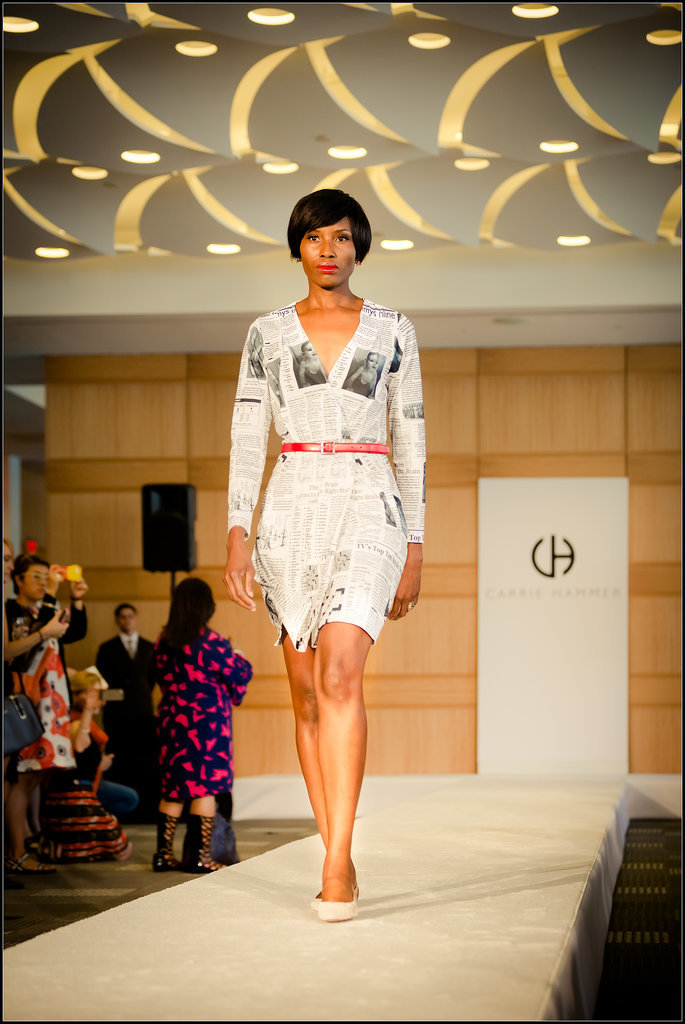
Photo: Attorney Uduak Oduok on the runway at New York Fashion Week for the Carrie Hammer show.
The FASHIONENTLAW Blog features legal insights, commentary, and analysis on contracts, intellectual property, business disputes, media, fashion, entertainment, and emerging issues shaping the creative industries.
Authored by Uduak Oduok professionally known as Ms. Uduak, a California fashion and entertainment lawyer with over 24 years of legal experience, the blog is designed for informational purposes only and does not constitute legal advice or create an attorney-client relationship.
To discuss your specific legal matter, schedule a consultation with the firm.
Schedule a Consultation